Gideon Rubin – Look Again
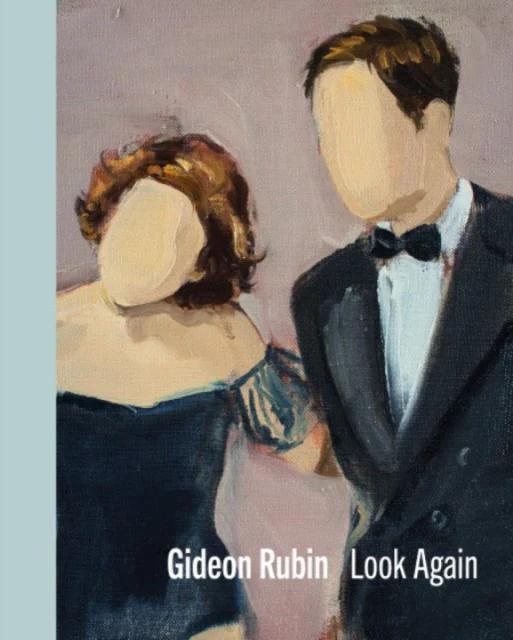
The second monograph to showcase Gideon Rubin's paintings and explorations of intimacy and solitude, identity and the inheritance of trauma, with essays by Jennifer Higgie and Dr. Matthew Holman and an exclusive conversation between Rubin and fellow painter Varda Caivano.Gideon Rubin (b. 1973, Israel) is an artist who lives and works in London. Exploring identity, history, and the inheritance of trauma in his enigmatic paintings, Rubins subject matter draws on myriad references such as film, popular culture, art history, and literature, creating and investigating mythologies from the recent past. Haunting and subtly theatrical, the paintings often feature faceless yet familiar figures. Underlying each work is Rubins expressive mark-making, muted palette and understated use of negative space and raw canvas.Look Again is Gideon Rubins second major trade monograph and showcases his substantial body of work since 2015, including studies of people in nature and scenes of solitude and intimacy. Author and art critic Jennifer Higgie discusses the evolution of his artistic style and his many influences Balthus, De Kooning, Guston, and Diebenkorn to name a few. Matthew Holmans expansive essay touches on Rubins cinematic characters, source material, his use of artistic conventions and engagement with sexuality. Holman investigates the meaning of redaction in Rubins work, both in his faceless portraits and in Black Book a work in which Rubin used black paint to erase the contents of a 1938 English translation of Mein Kampf. Exhibited at the Freud Museum in London in 2018, Black Book is an exploration of what is left out of history, as much as what is remembered.Painting is essential to Rubin, as both a creative and therapeutic act; "a log keeping him afloat in the middle of the sea," as he puts it. In conversation with fellow artist Varda Caivano, Rubin analyses his motivations, processes, and doubts, and explains his surprising route to painting. Despite coming from a lineage of painters on his fathers side, it was largely his mothers academic love of art that galvanized his artistic career, as well as a transformational experience in South America that opened him up to painting. An emotive poem by South Korean author Park Joon sheds further light on Rubins imagination.
$46.26
Gideon Rubin – Look Again—
$46.26
Description
The second monograph to showcase Gideon Rubin's paintings and explorations of intimacy and solitude, identity and the inheritance of trauma, with essays by Jennifer Higgie and Dr. Matthew Holman and an exclusive conversation between Rubin and fellow painter Varda Caivano.Gideon Rubin (b. 1973, Israel) is an artist who lives and works in London. Exploring identity, history, and the inheritance of trauma in his enigmatic paintings, Rubins subject matter draws on myriad references such as film, popular culture, art history, and literature, creating and investigating mythologies from the recent past. Haunting and subtly theatrical, the paintings often feature faceless yet familiar figures. Underlying each work is Rubins expressive mark-making, muted palette and understated use of negative space and raw canvas.Look Again is Gideon Rubins second major trade monograph and showcases his substantial body of work since 2015, including studies of people in nature and scenes of solitude and intimacy. Author and art critic Jennifer Higgie discusses the evolution of his artistic style and his many influences Balthus, De Kooning, Guston, and Diebenkorn to name a few. Matthew Holmans expansive essay touches on Rubins cinematic characters, source material, his use of artistic conventions and engagement with sexuality. Holman investigates the meaning of redaction in Rubins work, both in his faceless portraits and in Black Book a work in which Rubin used black paint to erase the contents of a 1938 English translation of Mein Kampf. Exhibited at the Freud Museum in London in 2018, Black Book is an exploration of what is left out of history, as much as what is remembered.Painting is essential to Rubin, as both a creative and therapeutic act; "a log keeping him afloat in the middle of the sea," as he puts it. In conversation with fellow artist Varda Caivano, Rubin analyses his motivations, processes, and doubts, and explains his surprising route to painting. Despite coming from a lineage of painters on his fathers side, it was largely his mothers academic love of art that galvanized his artistic career, as well as a transformational experience in South America that opened him up to painting. An emotive poem by South Korean author Park Joon sheds further light on Rubins imagination.